Floor Screed Mixers: Choosing the Right Mixer for Your Flooring Project
When installing floor screed, achieving a consistent mix is essential to the quality and efficiency of the installation.
Whether you’re working with traditional screeds, self-levelling compounds or specialist flooring systems, the correct mixing equipment can help produce consistent batches, improve productivity and keep material moving across the project.
For professional flooring contractors, manually mixing batch after batch isn’t always practical – particularly when working across larger commercial areas.
That’s where a purpose-built floor screed mixer comes in.
But which mixer is right for your project?
Why is mixing floor screed correctly so important?
Consistency is key when working with floor screed.
The correct ratio of material to water, thorough mixing and consistent batch production all influence the workability of the screed and ultimately the finished installation.
Using a dedicated mixer can help provide:
- Consistent batches throughout the project
- Thorough mixing of flooring materials
- Faster production across larger areas
- Reduced manual mixing and handling
- A more efficient installation process
However, not every type of floor screed requires the same mixing method. Always check the product manufacturer’s instructions before choosing your equipment.
Rota-Mixer – compact forced action mixing
For smaller flooring projects, the Rota-Mixer provides a compact forced action mixing solution.
With a 65-litre capacity and the ability to mix approximately two bags at a time, it’s suitable for a variety of flooring materials including screeds, epoxy and latex products.
The forced action design uses paddles to thoroughly combine the material, helping contractors achieve a consistent mix from one batch to the next.
Its relatively compact footprint also makes the Rota-Mixer a practical choice for sites with limited space or jobs that don’t need the capacity of a larger mixer.
Baron M110 – a versatile floor screed mixer
For projects requiring greater output, the Baron M110 provides a step up in mixing capacity.
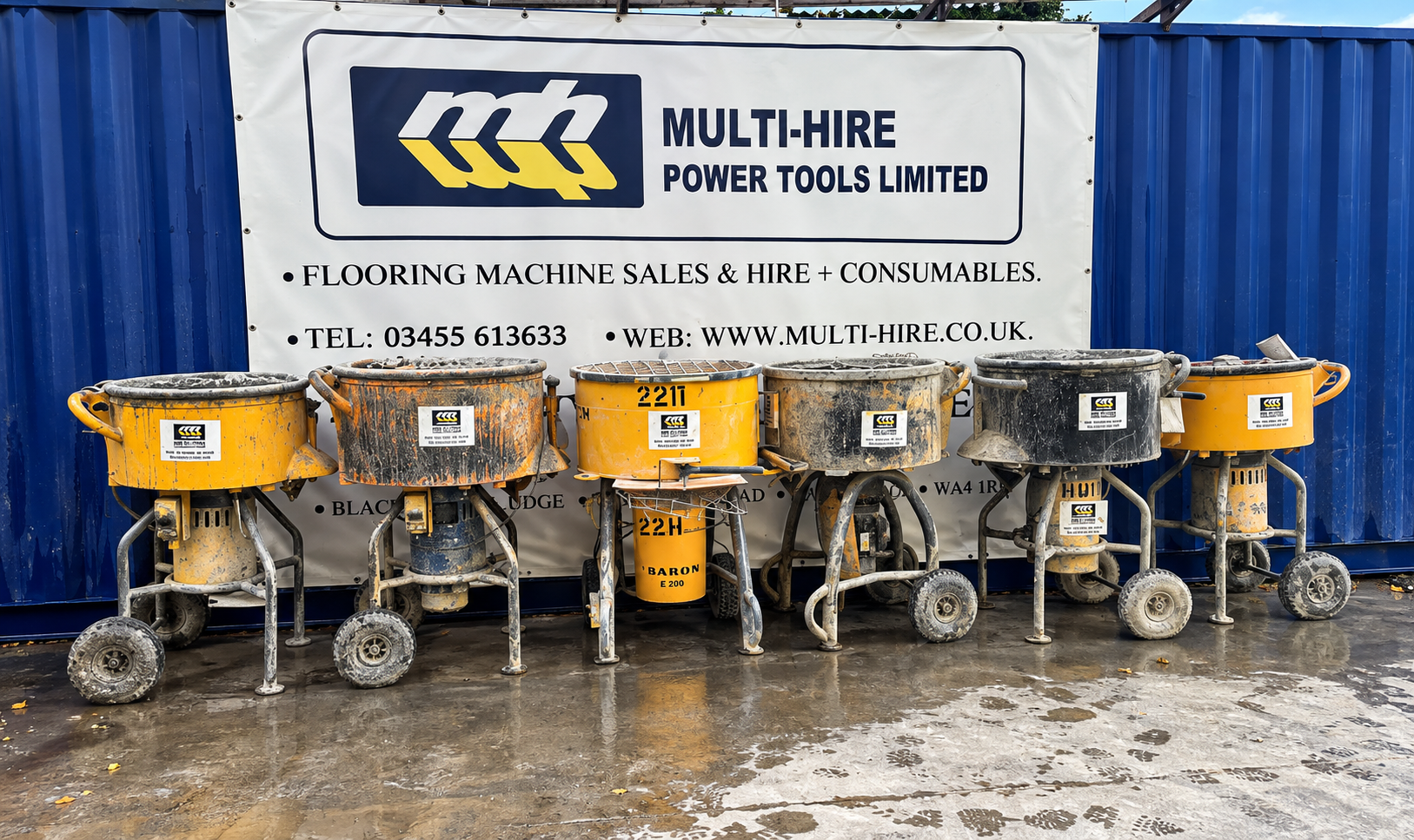
This 110-litre forced action mixer is capable of handling approximately three bags of material per batch and uses four mixing blades to produce a thorough, consistent mix.
Once mixed, you can discharge the material through the chute at the base of the pan directly into a bucket or barrow, helping keep the installation moving.
The M110 handles a range of flooring materials, including floor screed, MMA, quartz and resin-bound systems.
For contractors who regularly work across medium to larger flooring projects, it provides a useful balance between capacity, performance and site practicality.
Baron M200 – high-capacity floor screed mixing
When working across a large commercial floor, larger batch sizes can make a significant difference to productivity
The Baron M200 offers a 200-litre mixing capacity and can accommodate up to approximately six bags of material.
Like the M110, it uses a four-blade forced action mixing system and discharges the finished material directly into a bucket or barrow.
Its larger capacity makes the M200 particularly useful for high-volume floor screed installations that require a steady supply of material.
Portamix Hippo X-Series – mix, move and pour
For self-levelling floor screed, smoothing compounds and other flowable flooring materials, the Portamix Hippo X-Series offers a different approach to a traditional forced action mixer.
The system combines mixing, transportation and pouring within one mobile unit, helping contractors keep material moving efficiently across the working area.
With an 85-litre cannister and capacity to mix up to six 20kg bags plus water, the X-Series provides a practical solution for larger flooring installations where consistent batches and continuous material flow are important.
Mix the material directly inside the cannister, wheel the machine to where you need it, then tip the unit to pour the mixed product directly onto the floor.
This makes it particularly suited to:
- Self-levelling floor screed
- Smoothing compounds
- Cementitious overlays
- Other flowable flooring products
By combining the mixing, moving and pouring stages, the Portamix can also reduce the need to transfer freshly mixed material between multiple buckets.
For contractors working across larger areas, this can create a more efficient workflow while helping maintain consistency from one batch to the next.
View the Portamix X-Series for hire
Hand Mixers – a simple option for smaller floor screed jobs
Not every floor screed project requires a large forced action mixer or mobile mixing station.
For smaller quantities, repairs and areas where access is restricted, a professional hand mixer can provide a simple and practical solution.
A heavy-duty hand mixer or Mega Mixer allows contractors to mix material directly in a suitable bucket or mixing container. This makes it useful when you only need smaller batches or don’t have the space for larger mixing equipment.
Hand mixers can suit a range of flooring products, depending on the manufacturer’s mixing requirements, including smoothing compounds, self-levelling products and other bagged flooring materials.
They’re also easy to transport and set up, making them a useful option for smaller jobs where speed and portability matter.
Always check the flooring manufacturer’s technical data sheet to ensure the mixer and paddle are suitable for the product you’re using.
Which floor screed mixer do you need?
Choosing the right floor screed mixer isn’t simply about selecting the biggest machine available.
The correct option depends on several factors, including:
- The type of floor screed or flooring material
- Manufacturer mixing requirements
- Number of bags required per batch
- Total floor area
- Available site power
- Access and working space
- Required output
- How the mixed material will be transported and placed
For smaller batches, a compact forced action mixer such as the Rota-Mixer may provide everything required.
As production requirements increase, the Baron M110 or M200 provide greater batch capacities.
For flowable and self-levelling floor screed, mobile systems such as the Portamix Hippo and X-Series allow contractors to combine mixing, transportation and pouring within the installation process.
Always check the floor screed manufacturer’s instructions
It’s important to remember that not every mixer is suitable for every flooring product.
Different floor screed systems have specific requirements for water quantities, mixing times and the order in which materials must be introduced.
For example, some products require powder to be gradually added to water while the mixer is already operating. This may affect whether a particular forced action or pan mixer is suitable.
Always check the manufacturer’s technical data sheet before starting the installation.
If you’re unsure, speak to the Multi-Hire team with the name of the product you’re installing and we can help identify the most appropriate mixing equipment for the job.
Floor Screed Mixer Hire from Multi-Hire
From smaller repairs and installations to large commercial floor screed projects, Multi-Hire offers a range of professional mixing equipment for hire.
Our range includes:
Rota-Mixer – compact forced action mixing
Baron M110 – medium-capacity forced action mixing
Baron M200 – high-capacity forced action mixing
Portamix Hippo X-Series – mobile mix, move and pour system
Hand Mixer/Mega Mixer – portable mixing for smaller batches
Choosing the correct mixer can help improve consistency, reduce manual handling and keep your flooring project moving efficiently.
View Multi-Hire’s full range of screed and resin mixers
Floor Screed Mixer FAQs
What is the best mixer for floor screed?
The best mixer depends on the type of floor screed, the manufacturer’s mixing requirements and the volume of material you need to produce. Forced action mixers suit many screed applications, while mobile Portamix systems work particularly well with self-levelling and flowable flooring products.
For a more detailed comparison, see our guide above on choosing the right floor screed mixer for your project.
Can you mix floor screed with a hand mixer?
A hand mixer can suit smaller quantities of certain floor screed, self-levelling and smoothing products. Always check the product manufacturer’s technical data sheet first, as different materials require different mixing methods, paddles and mixing times.
See the Hand Mixers section above for more information on when a portable mixer may suit the job.
What is a forced action mixer used for?
A forced action mixer uses rotating paddles to thoroughly combine materials and produce consistent batches. Flooring contractors commonly use them for screeds and other specialist flooring products.
Read our sections on the Rota-Mixer, Baron M110 and Baron M200 above to compare the different capacities available.
What mixer should I use for self-levelling floor screed?
For larger self-levelling installations, a mobile mixing system such as the Portamix Hippo X-Series can provide an efficient solution. It allows contractors to mix, move and pour material using one system.
See our Portamix Hippo X-Series section above for more information.
Should I use a forced action mixer or a Portamix?
It depends on the flooring material and how you need to work on site. A forced action mixer provides thorough batch mixing, while the Portamix combines mixing with the ability to transport and pour flowable material around the working area.
Our floor screed mixer guide above compares the available options to help you choose the most appropriate machine.
Can Multi-Hire help me choose a floor screed mixer?
Yes. If you’re unsure which mixer suits your floor screed or flooring product, speak to the Multi-Hire team with the product name and project requirements. We can help identify suitable equipment from our mixing range.
View Multi-Hire’s screed and resin mixing equipment
Speak to the Multi-Hire team on 03455 613633.
Hiring solutions to flooring problems since 1985.